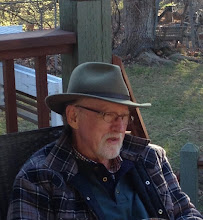
Phil Hochstein is the President of the Independent Contractors & Business Association of BC, an anti-union lobby group. His organization has been running a television campaign for several months now called "VoteSmart BC" claiming that the 1990's, when the NDP was the government in BC, was the equivalent of the Dark Ages, economically.
The Courier-Islander ran a letter from him making the same claims. My response was printed April 17, 2009:
The headline on Phil Hochstein's letter says it all: "NDP policies will lead BC back to the '90s"
We should be so lucky!
Annual growth for the last 8 years: 2.6%. Annual growth during the 90's? 2.8%.
Total jobs added under the Liberals? 323,700. Under the NDP? 344,100.
As Bill Tieleman says in his 24 Hours column of April 24, "Premier Gordon Campbell's B.C. Liberals [are the] worst economic managers in the province's history!" and "British Columbia job losses lead all Canada in recession!" and "B.C. 2009 budget deficit [is as] phony as a $3 bill!"
He cites the statistics that back up his claims.
So yes, please, let's see if we can recreate the growth of the '90's. Bring back the NDP.
Friday, April 17, 2009

Monday, April 6, 2009
All that is necessary for the triumph of evil ...
printed in the Globe and Mail, April 6, 2009
Dear Sirs,
I regret not donating to the fund that bought Abousfian Abdelrazik's plane ticket home.
But now I'm both angry and worried: what kind of precedent is it when a minister of government gets to decide which of Canada's citizens can return to his Canadian home?
Sign me up for helping to finance the court case.
--Justus Havelaar
Dear Sirs,
I regret not donating to the fund that bought Abousfian Abdelrazik's plane ticket home.
But now I'm both angry and worried: what kind of precedent is it when a minister of government gets to decide which of Canada's citizens can return to his Canadian home?
Sign me up for helping to finance the court case.
--Justus Havelaar
Monday, March 9, 2009
Marion Wright's Plutonic relationship
Published in the Campbell River Courier-Islander, March 6, 2009:
The Editor,
Dear Sir,
re: Wright, Trevena square off on mill (March 4)
This is the second time Marion Wright, Liberal candidate, has criticized our MLA for speaking out against Plutonic Power's Bute project.
Of course Ms Trevena's position is considerably more nuanced than this criticism suggests, but one couldn't expect Ms Wright to acknowledge that.
One could, however, wonder why Ms Wright is becoming such a shill for a project that has passed no environmental reviews, has not received any approvals, and has not demonstrated it is needed for anything except supplying power to California.
Ms Trevena's comments and politics are a matter of record. Maybe Ms Wright would be equally transparent if she answered some relevant questions:
- Is such uncritical and premature enthusiasm what we could expect from Ms Wright should she become a Liberal MLA?
- Would any and all economic activity, regardless of environmental impact, garner equal enthusiasm? Or is this project somehow special?
- Has the government already decided to approve the project should it be re-elected?
- To what extent are Plutonic and its principals funding her campaign?
Sincerely,
The Editor,
Dear Sir,
re: Wright, Trevena square off on mill (March 4)
This is the second time Marion Wright, Liberal candidate, has criticized our MLA for speaking out against Plutonic Power's Bute project.
Of course Ms Trevena's position is considerably more nuanced than this criticism suggests, but one couldn't expect Ms Wright to acknowledge that.
One could, however, wonder why Ms Wright is becoming such a shill for a project that has passed no environmental reviews, has not received any approvals, and has not demonstrated it is needed for anything except supplying power to California.
Ms Trevena's comments and politics are a matter of record. Maybe Ms Wright would be equally transparent if she answered some relevant questions:
- Is such uncritical and premature enthusiasm what we could expect from Ms Wright should she become a Liberal MLA?
- Would any and all economic activity, regardless of environmental impact, garner equal enthusiasm? Or is this project somehow special?
- Has the government already decided to approve the project should it be re-elected?
- To what extent are Plutonic and its principals funding her campaign?
Sincerely,
Tuesday, February 3, 2009
Some adventures involving Eli
The approaching dog is one of those goofy, tongue-out, tail-rotating, ramble-in-the-creek and pee-on-the-stick lab crosses.
He is accompanied by a young woman who, as they approach, calls out reassuringly, “It’s OK: he’s friendly!”
By now I’ve got Eli sitting on the side of the trail, and I’m stroking his throat. “Good boy, Eli. It’s OK; just relax,” and then, “sit!” as the lab gambols closer.
“He’ll probably nip if your dog comes too close,” I say to her, just before Eli snarls and tries to jump up to do just that. But I have hold of him. He’s not going anywhere.
The woman calls the lab to her, as I explain, “He gets paranoid when he’s on the leash, but I can’t let him off because he’d probably take off.”
“Sorry,” she says.
“No harm done. Sit, Eli.” He does.
Then they’re past, and Eli, following his nose, leads me up the trail, cool as if the confrontation had never happened.
We meet several other dogs before the end of our walk but a couple are leashed and none of them approach. Eli doesn’t so much as raise a hair.
Then, when we’re nearly back at the car, we overtake a man walking two large black and brown spaniels. They’re running back and forth across the road. One of them spots us; Eli goes into his stalking crouch as we catch up to them. When I let him off the leash, he takes of like a rocket, shooting past them and off the trail into the bush, the spaniels in hot pursuit. They flash back and forth across the road, looping through the undergrowth each time. There’s no way the spaniels can keep up.
“Is he a puppy?” the man asks.
“No, he’s at least five,” I say. “He just loves running.”
A little later we’re well past , and I put Eli back on the leash so he can lead me to where the car is parked.
Eli has an impeccable sense of where the good stuff lies.
In December he and I were up near the Island Highway when he went for a ramble in the woods and then just disappeared. I walked all the way back to the car, then most of the way back to where I’d last seen him, then drove to his house and mine, and finally spotted him, about an hour later, ambling along Dogwood near where I’d been parked. He smelled of dead stuff, and consequently got hosed when I returned him home.
So it wasn’t as much of a surprise as it could have been when, about a month later, he once again disappeared in the same general area. This time he was gone for a somewhat shorter time, but it was still over an hour of much calling and searching (I’d just decided to let him find his own way home) before he came streaking down the trail to where the car was parked. This time he hadn’t rolled in it, at least.
So these days he walks on the leash.
He is accompanied by a young woman who, as they approach, calls out reassuringly, “It’s OK: he’s friendly!”
By now I’ve got Eli sitting on the side of the trail, and I’m stroking his throat. “Good boy, Eli. It’s OK; just relax,” and then, “sit!” as the lab gambols closer.
“He’ll probably nip if your dog comes too close,” I say to her, just before Eli snarls and tries to jump up to do just that. But I have hold of him. He’s not going anywhere.
The woman calls the lab to her, as I explain, “He gets paranoid when he’s on the leash, but I can’t let him off because he’d probably take off.”
“Sorry,” she says.
“No harm done. Sit, Eli.” He does.
Then they’re past, and Eli, following his nose, leads me up the trail, cool as if the confrontation had never happened.
We meet several other dogs before the end of our walk but a couple are leashed and none of them approach. Eli doesn’t so much as raise a hair.
Then, when we’re nearly back at the car, we overtake a man walking two large black and brown spaniels. They’re running back and forth across the road. One of them spots us; Eli goes into his stalking crouch as we catch up to them. When I let him off the leash, he takes of like a rocket, shooting past them and off the trail into the bush, the spaniels in hot pursuit. They flash back and forth across the road, looping through the undergrowth each time. There’s no way the spaniels can keep up.
“Is he a puppy?” the man asks.
“No, he’s at least five,” I say. “He just loves running.”
A little later we’re well past , and I put Eli back on the leash so he can lead me to where the car is parked.
Eli has an impeccable sense of where the good stuff lies.
In December he and I were up near the Island Highway when he went for a ramble in the woods and then just disappeared. I walked all the way back to the car, then most of the way back to where I’d last seen him, then drove to his house and mine, and finally spotted him, about an hour later, ambling along Dogwood near where I’d been parked. He smelled of dead stuff, and consequently got hosed when I returned him home.
So it wasn’t as much of a surprise as it could have been when, about a month later, he once again disappeared in the same general area. This time he was gone for a somewhat shorter time, but it was still over an hour of much calling and searching (I’d just decided to let him find his own way home) before he came streaking down the trail to where the car was parked. This time he hadn’t rolled in it, at least.
So these days he walks on the leash.
Thursday, January 29, 2009
Note to Mr Martin
From today's column:
"The Iggy strategy is to give the federal government a lifeline until the fall or thereabouts, and then pounce."
"But Iggy won’t be terribly bothered by either’s reaction."
All other references to political leaders, present and past, use either their full names, or their last names prefaced by "Mr", or refer to them by position.
Using "Iggy" to refer to the Leader of the Opposition is belittling, verging on the disrespectful, and I would prefer if commentators like yourself (whose commentary I read regularly and admire) would at least be consistent.
Please, Mr Martin, set an example and dump "Iggy" (unless of course you also use nicknames to refer to Mr Layton, Mr Harper, et al).
Sincerely,
"The Iggy strategy is to give the federal government a lifeline until the fall or thereabouts, and then pounce."
"But Iggy won’t be terribly bothered by either’s reaction."
All other references to political leaders, present and past, use either their full names, or their last names prefaced by "Mr", or refer to them by position.
Using "Iggy" to refer to the Leader of the Opposition is belittling, verging on the disrespectful, and I would prefer if commentators like yourself (whose commentary I read regularly and admire) would at least be consistent.
Please, Mr Martin, set an example and dump "Iggy" (unless of course you also use nicknames to refer to Mr Layton, Mr Harper, et al).
Sincerely,
Saturday, January 24, 2009
Let's make the federal NDP relevant again...
Do you think you’ll see serious federal electoral reform in your lifetime? Neither do I.
That’s just depressing, because the system we have isn’t working very well for us at the moment:
Since May of 2004 we’ve had three elections, each costing us about $300 million, each producing a minority government. Our most recent government, elected last September, almost didn’t make it to Christmas, and could easily fall before Spring if the Conservative leadership hasn’t learned how to govern according to their mandate. (that’s under 38% of the 59.1% of eligible voters who bothered to turn out – the lowest percentage in Canadian history)
At present we have 5 competitive parties, the least of which (Greens) pulled 6.8% of the vote last time. This means the next election will probably produce another minority. However, should it produce a majority, the party that forms government will almost certainly have commanded far fewer than 50% of the votes cast, and will nonetheless rule as if the Prime Minister were an absolute monarch.
We’ve already experienced that, and it didn’t make us happy. Lots of us agreed with the Globe’s Jeffrey Simpson at the time when he complained that Prime Minister Chrétien had concentrated so much power in his office that Liberal MPs had effectively become rubber stamps. Since then the situation has only grown worse; the democratic ideals of the Reform Party (remember when it ran on a platform of MPs representing constituents rather than a party?) have transmuted into the absolute obedience to Prime Ministerial diktat required of Conservative MPs. One really cannot blame voters for tuning out.
So people like me were pretty impressed by the Liberal-NDP “Accord on a Cooperative Government” signed in December, just before the Governor-General prorogued Parliament. For one thing, the proposed coalition represented 44% (as opposed to 38%) of the electorate, and would have represented 55% when supported by the Bloc. (over 60% if one includes the Greens, who of course didn’t win a seat). For another, it proved political parties could cooperate to work in the best interests of the country. It set out an achievable agenda and a time-frame. It appeared to put off another inevitable election. It held promise of reflecting the views most Canadians have of the common good.
To us it appeared to be a welcome and civilized alternative to an unusually-petty and dogmatically-partisan government.
Well, we all think we know how that turned out, although the final pages of the script have yet to be written. The punditry has pretty uniformly concluded that events have killed the deal, even though in the meantime popular opinion turned from overwhelmingly against in December to 50% in favour by mid-January. Apparently so far voters tend to like the idea of Prime Minister Ignatieff.
And what’s not to like? A Liberal-NDP government could surely find (or compromise on) policies on the big issues of the day – the economy, the environment, social policy...– which would be an improvement on what we have presently and wouldn’t offend any of our core values. Surely we can accept incrementalism, particularly if it’s effective.
I suspect we’d be a lot less happy with prime Minister Ignatieff, the leader of a majority Liberal government.
Whether the coalition comes together or not, we NDPers should hold on to the idea. During the last election many of us were not happy with the “I’m Jack Layton, and I’m running for Prime Minister” campaign, when nobody, Layton included, thought he’d actually be Prime Minister in the foreseeable future. But he and the rest of the New Democrat caucus could be a key part of any number of coalition governments in the future, and the country would be the better for it, because all our MPs would have a voice in the government caucus, inevitably some of our policy ideas would be in play, and some of our people would even hold portfolios in cabinet.
I bet we’d still pull about 15% of the vote, maybe more if voters knew that voting NDP could mean a vote for an ethical, socially and environmentally-conscious, majority government.
That may not be the proportional representation we really need, but it’s doable, now.
And it could be a lot better than what we have.
That’s just depressing, because the system we have isn’t working very well for us at the moment:
Since May of 2004 we’ve had three elections, each costing us about $300 million, each producing a minority government. Our most recent government, elected last September, almost didn’t make it to Christmas, and could easily fall before Spring if the Conservative leadership hasn’t learned how to govern according to their mandate. (that’s under 38% of the 59.1% of eligible voters who bothered to turn out – the lowest percentage in Canadian history)
At present we have 5 competitive parties, the least of which (Greens) pulled 6.8% of the vote last time. This means the next election will probably produce another minority. However, should it produce a majority, the party that forms government will almost certainly have commanded far fewer than 50% of the votes cast, and will nonetheless rule as if the Prime Minister were an absolute monarch.
We’ve already experienced that, and it didn’t make us happy. Lots of us agreed with the Globe’s Jeffrey Simpson at the time when he complained that Prime Minister Chrétien had concentrated so much power in his office that Liberal MPs had effectively become rubber stamps. Since then the situation has only grown worse; the democratic ideals of the Reform Party (remember when it ran on a platform of MPs representing constituents rather than a party?) have transmuted into the absolute obedience to Prime Ministerial diktat required of Conservative MPs. One really cannot blame voters for tuning out.
So people like me were pretty impressed by the Liberal-NDP “Accord on a Cooperative Government” signed in December, just before the Governor-General prorogued Parliament. For one thing, the proposed coalition represented 44% (as opposed to 38%) of the electorate, and would have represented 55% when supported by the Bloc. (over 60% if one includes the Greens, who of course didn’t win a seat). For another, it proved political parties could cooperate to work in the best interests of the country. It set out an achievable agenda and a time-frame. It appeared to put off another inevitable election. It held promise of reflecting the views most Canadians have of the common good.
To us it appeared to be a welcome and civilized alternative to an unusually-petty and dogmatically-partisan government.
Well, we all think we know how that turned out, although the final pages of the script have yet to be written. The punditry has pretty uniformly concluded that events have killed the deal, even though in the meantime popular opinion turned from overwhelmingly against in December to 50% in favour by mid-January. Apparently so far voters tend to like the idea of Prime Minister Ignatieff.
And what’s not to like? A Liberal-NDP government could surely find (or compromise on) policies on the big issues of the day – the economy, the environment, social policy...– which would be an improvement on what we have presently and wouldn’t offend any of our core values. Surely we can accept incrementalism, particularly if it’s effective.
I suspect we’d be a lot less happy with prime Minister Ignatieff, the leader of a majority Liberal government.
Whether the coalition comes together or not, we NDPers should hold on to the idea. During the last election many of us were not happy with the “I’m Jack Layton, and I’m running for Prime Minister” campaign, when nobody, Layton included, thought he’d actually be Prime Minister in the foreseeable future. But he and the rest of the New Democrat caucus could be a key part of any number of coalition governments in the future, and the country would be the better for it, because all our MPs would have a voice in the government caucus, inevitably some of our policy ideas would be in play, and some of our people would even hold portfolios in cabinet.
I bet we’d still pull about 15% of the vote, maybe more if voters knew that voting NDP could mean a vote for an ethical, socially and environmentally-conscious, majority government.
That may not be the proportional representation we really need, but it’s doable, now.
And it could be a lot better than what we have.
Monday, January 19, 2009
From BC-STV to FSA
I
Last Saturday the Globe and Mail published a column by Gordon Gibson, who was, in the days when Social Credit ruled BC, leader of the provincial Liberal Party and is now, along with Preston Manning, a Senior Fellow of the Fraser Institute.
In 2002 Mr. Gibson was appointed by the Premier to be the architect of the Citizens’ Assembly, a body specifically constituted to consider BC’s electoral system. It ultimately came up with a “made-in-BC” system called “BC-Single Transferable Vote” which was put to referendum and lost narrowly (just under 58%; it needed 60%) during the last provincial election. Because the result was so close, it’s up for referendum again.
Naturally Mr Gibson claims it could pass this time. “Good ideas can be contagious” he says. “British Columbia may decide to lead the way” for the rest of Canada, he says.
Not a chance, I say. The proponents will be lucky to get 40% this time. I may have changed my mind and voted “yes” last time, but I’m changing my mind back. And I’m betting at least 18% of yes voters are on the same page.
This time we have maps. Our area (North Island-South Coast, 4 seats) would consist of the mainland from Howe Sound north to nearly Bella Bella, plus the entire Island north of a line drawn between Qualicum and Port Renfrew. Mid-Island (4 seats) would cover the east coast from Qualicum to the Malahat. The capital Region would cover the rest of the Island: Saanich, Victoria, Sooke, and the southern Gulf Islands (7 seats). Imagine living in, say, Port Hardy and trying to figure out which of your four representatives is going to deal with the fact that you don’t have an ambulance service on weekends, or that your mill is closing. Imagine trying to decide who to vote for when you’ve never met any of the candidates and there are 24 on the ballot.
Imagine being a candidate, trying to run a campaign.
Last time we actually had an incentive to vote yes: we had Gordon Campbell’s virtual dictatorship (3 NDPers, and no Official Opposition) to remind us why our present system sucks. This time the system still sucks, but at least we have an opposition; we’ve lost the urgency of the call for electoral reform.
I hate our present system, but BC-STV no longer seems like any kind of solution. It just seems eccentric and opaque.
II
Mr Gibson also made an either astonishingly-naive or calculatedly-provocative claim when he predicted that the NDP could win the next provincial election: “Ms James is the way to bet as of today.”
Today a Mustel Group poll was released showing the BCLiberals ahead by 14%, and yes, in spite of my partisan inclinations, I’m taking bets from anyone who thinks the NDP can be the next government of BC!
Not to worry: Gibson doesn’t actually believe that the NDP could win, or he’d have dragged out many more of the usual canards about the BCNDP than the two he couldn’t resist: “the old class warriors still to be found in the NDP backrooms” and “”big unions will still be with the New Democrats”.
So yesterday, Gordon.
But in tactics, so Socred. Remember the “Socialists at the gates”? Remember the “red tide” threatening BC freedoms? The barbarians are upon us; everybody chip in, and we’ll defeat them before they take over!
His column is just one of the first shots in an election campaign.
III
The BC Teachers’ Federation is running television ads exposing (just in case we’ve gotten used to the current situation) what the government has done to public education since it was elected in 2001.
Why on earth would they do that in January? The election isn’t until May, and anything said to influence voters today will be overwhelmed by then.
Well, they can’t do it closer to the election date, because that would be illegal. As of this election, all third parties are limited to spending $3000 per constituency (about $150,000 provincially) on any communications that could affect the election outcome in the three months before the election. That means for those three months political parties control the message, and those parties with the deepest pockets have the advantage.
Guess which party has no problem raising money? Guess which interests provide it?
Hint: it’s not unions. Or individuals.
IV
The BCTF is being beaten up in the press for its opposition to the Foundations Skills Assessment tests to be written in grades 4 and 7 in February.
It is evident that to most journalist this opposition looks like nothing much more profound that teacher insubordination, likely based on their unwillingness to have their work assessed. The fact that many teacher spokespersons drag out questionable anecdotes about emotional trauma suffered by some vulnerable students doesn’t help with this perception.
What’s lost in all the journalistic noise is the fact that the BCTF position is more nuanced than a mere boycott: the official position is that the tests are fine as long as they’re not used to draw conclusions about individual students or the schools they go to.
I’m no longer in any way connected to this issue, but I suspect the Federation isn’t exactly leading the parade: I think teachers have really had their buttons pushed by this test. How else to interpret an 85% vote in favour of boycott when it doesn’t directly affect the vast majority of teachers?
The real killer for teachers, I suspect, is that they resent having to spend the time to prepare their students for writing these tests, resent having to spend time marking them, and resent the millions spend on administering and reporting on them. This is especially so because they do not find the tests useful either for their work with students, or for their students. Teachers know that parents get more reliable and more useful information directly from them, and they know that the use the Fraser Institute makes of the results is overtly political.
I have no doubt that the government will attempt to use the boycott to deflect attention from their less-than-brilliant record in dealing with public education. If I’m right about the origins of that boycott, they risk stirring up hornets.
Last Saturday the Globe and Mail published a column by Gordon Gibson, who was, in the days when Social Credit ruled BC, leader of the provincial Liberal Party and is now, along with Preston Manning, a Senior Fellow of the Fraser Institute.
In 2002 Mr. Gibson was appointed by the Premier to be the architect of the Citizens’ Assembly, a body specifically constituted to consider BC’s electoral system. It ultimately came up with a “made-in-BC” system called “BC-Single Transferable Vote” which was put to referendum and lost narrowly (just under 58%; it needed 60%) during the last provincial election. Because the result was so close, it’s up for referendum again.
Naturally Mr Gibson claims it could pass this time. “Good ideas can be contagious” he says. “British Columbia may decide to lead the way” for the rest of Canada, he says.
Not a chance, I say. The proponents will be lucky to get 40% this time. I may have changed my mind and voted “yes” last time, but I’m changing my mind back. And I’m betting at least 18% of yes voters are on the same page.
This time we have maps. Our area (North Island-South Coast, 4 seats) would consist of the mainland from Howe Sound north to nearly Bella Bella, plus the entire Island north of a line drawn between Qualicum and Port Renfrew. Mid-Island (4 seats) would cover the east coast from Qualicum to the Malahat. The capital Region would cover the rest of the Island: Saanich, Victoria, Sooke, and the southern Gulf Islands (7 seats). Imagine living in, say, Port Hardy and trying to figure out which of your four representatives is going to deal with the fact that you don’t have an ambulance service on weekends, or that your mill is closing. Imagine trying to decide who to vote for when you’ve never met any of the candidates and there are 24 on the ballot.
Imagine being a candidate, trying to run a campaign.
Last time we actually had an incentive to vote yes: we had Gordon Campbell’s virtual dictatorship (3 NDPers, and no Official Opposition) to remind us why our present system sucks. This time the system still sucks, but at least we have an opposition; we’ve lost the urgency of the call for electoral reform.
I hate our present system, but BC-STV no longer seems like any kind of solution. It just seems eccentric and opaque.
II
Mr Gibson also made an either astonishingly-naive or calculatedly-provocative claim when he predicted that the NDP could win the next provincial election: “Ms James is the way to bet as of today.”
Today a Mustel Group poll was released showing the BCLiberals ahead by 14%, and yes, in spite of my partisan inclinations, I’m taking bets from anyone who thinks the NDP can be the next government of BC!
Not to worry: Gibson doesn’t actually believe that the NDP could win, or he’d have dragged out many more of the usual canards about the BCNDP than the two he couldn’t resist: “the old class warriors still to be found in the NDP backrooms” and “”big unions will still be with the New Democrats”.
So yesterday, Gordon.
But in tactics, so Socred. Remember the “Socialists at the gates”? Remember the “red tide” threatening BC freedoms? The barbarians are upon us; everybody chip in, and we’ll defeat them before they take over!
His column is just one of the first shots in an election campaign.
III
The BC Teachers’ Federation is running television ads exposing (just in case we’ve gotten used to the current situation) what the government has done to public education since it was elected in 2001.
Why on earth would they do that in January? The election isn’t until May, and anything said to influence voters today will be overwhelmed by then.
Well, they can’t do it closer to the election date, because that would be illegal. As of this election, all third parties are limited to spending $3000 per constituency (about $150,000 provincially) on any communications that could affect the election outcome in the three months before the election. That means for those three months political parties control the message, and those parties with the deepest pockets have the advantage.
Guess which party has no problem raising money? Guess which interests provide it?
Hint: it’s not unions. Or individuals.
IV
The BCTF is being beaten up in the press for its opposition to the Foundations Skills Assessment tests to be written in grades 4 and 7 in February.
It is evident that to most journalist this opposition looks like nothing much more profound that teacher insubordination, likely based on their unwillingness to have their work assessed. The fact that many teacher spokespersons drag out questionable anecdotes about emotional trauma suffered by some vulnerable students doesn’t help with this perception.
What’s lost in all the journalistic noise is the fact that the BCTF position is more nuanced than a mere boycott: the official position is that the tests are fine as long as they’re not used to draw conclusions about individual students or the schools they go to.
I’m no longer in any way connected to this issue, but I suspect the Federation isn’t exactly leading the parade: I think teachers have really had their buttons pushed by this test. How else to interpret an 85% vote in favour of boycott when it doesn’t directly affect the vast majority of teachers?
The real killer for teachers, I suspect, is that they resent having to spend the time to prepare their students for writing these tests, resent having to spend time marking them, and resent the millions spend on administering and reporting on them. This is especially so because they do not find the tests useful either for their work with students, or for their students. Teachers know that parents get more reliable and more useful information directly from them, and they know that the use the Fraser Institute makes of the results is overtly political.
I have no doubt that the government will attempt to use the boycott to deflect attention from their less-than-brilliant record in dealing with public education. If I’m right about the origins of that boycott, they risk stirring up hornets.
Friday, January 16, 2009
Beaver Lodge Forest Lands

One Saturday earlier this month, shortly after Sandy and I had parked at the McPhedran access to the Beaver Lodge Lands in preparation for setting off, we were accosted by a gentleman(1) who asked us if we would take a UBC survey dealing with the Lands.
Of course we were delighted to do so. To our minds the BLL is one of the very best things about living in Campbell River (not least because of the back story of how they came to be, for which see http://www.for.gov.bc.ca/dcr/blflfolder/index.html) one of those geographical attributes that would make us the envy of the rest of the world if only it knew about them.(2)
At present, the Beaver Lodge Lands is a relatively-undeveloped 502 hectare gem within Campbell River's municipal boundaries. The area was heavily logged in the late 1920’s, and was either the first or one of the first replanted forests on the Coast. Consequently, large sections are mixed forest, featuring 75-year old Douglas Firs and Sitka Spruces, huge Bigleaf Maples, Red Alders, and Black Cottonwoods, as well as Western Hemlocks, Grand Firs, White Pines, Cascara and Dogwood, plus cherries and crab-apples, and all the shrubs, flowers and ferns associated with an East Vancouver Island forest. The only thing missing in numbers are the Red Cedars that must once have been among the most impressive features of the area; today there are some, but one has to know where to look, and it will take another few decades before these really stick out.
There are also areas that were logged more recently, and thus illustrate what happens while a coastal forest recovers.
The area is crossed by the remains of several logging roads, plus the grades of the original logging railway and its spurs. There are also a number of lovely unimproved trails following the various manifestations of Simms Creek as well as some linking trails and even a couple created by mountain bikers which fulfill their eccentric requirements.
I’ve been running in this area since the 1970’s, long before we knew it had been given to the province as an experimental forest, and that eventually it would be protected, by legislation, from development. In fact, to those of us who used it to run from Carihi to Southgate, the trail now called the “Rail Trail” was known a
 s the “Jeep Trail”. It was quite overgrown in places, and in winter so muddy that it was an uncomfortable, if not impassable route. We fully expected that, as Campbell River grew, it would eventually be covered by the subdivisions that now squeeze up to the boundaries.
Anyway, I talked to other agents soliciting survey completion on at least three more occasions, at other entrances to the Lands. Although it was unusually cold and snowy for most of the survey time, I hope they got a good sample; it’s always amazing to me the number of people one sees on the trails, particularly on weekends, at all times of the year, and how few of them are people I recognize, although I walk or run there almost every day. I also hope that people won’t press for more development or more infrastructure. Our experience of the area won’t be enhanced by interpretive signs or fencing or more wheelchair access or restrictions on dogs and horses.
It’s not Stanley Park, and Campbell River isn’t Vancouver. The Beaver Lodge Forest Lands are pretty much perfect the way they are, and I hope they are left that way.
-----------------------------------------------------------------------
1) Turned out he was a former student from Carihi days. He did not appear disappointed that I couldn’t remember him.
2) Happily most of it doesn’t, or we’d be overrun!
Thursday, January 1, 2009
Explaining the car in our driveway
 In our life together, Sandy and I have had many more than our share of memorable motoring adventures, fortunately very few of them actually life-threatening.
In other words, there haven’t been a lot of incidents comparable to that time in 1970 on a very icy highway just south of 100 Mile House when I lost control of our Karmann Ghia and ended up doing several 360’s before stopping, completely enervated, facing back towards Quesnel on the wrong side of the road... Happily, the road was straight and there was no oncoming traffic at the time.
Sandy likes to claim that we’ve broken down at least once in every province in Canada except Newfoundland, but I think she’s exaggerating: as I recall it, we haven’t broken down in Prince Edward Island, or Nova Scotia either. Of course we weren’t there for very long, thus lessening our chances, and we did nearly break down in Nova Scotia, before we found the propane station in Springhill, just as we were pretty much down to fumes.
But I digress.
Although she appears to handle these events with more equanimity and resignation than I do, Sandy does not enjoy them at all. So it was a good thing that, when I slid our Corolla off the highway just north of Parksville while driving Robin to the ferry during the snows of the week before Christmas, she was not with us. And it was also a very good thing that the car came to a soft rest in a bank of lovely powdery snow, and that, after we had done a little digging, several people stopped and helped push us out. We could complete the errand, and I returned to Campbell River, expecting something dire to happen at any time.
Because the entire engine compartment had filled with snow, it first looked as if, apart from a large but only decorative piece of bumper missing, I’d gotten off lightly. We decided to live with it. Then I noticed the plate that protects the underside of the engine had come partially unmoored, so I took the car in to ICBC and from there to the body shop.
Well, it turns out it needs a new radiator as well, plus the fan housing is cracked and needs replacement. The parts are on their way; meanwhile, the car is in the shop.
So yesterday we took the Vanagon out to go up the mountain skiing. We had already turned onto the highway when I remembered I hadn’t put in the chains, and then the road surface deteriorated, so we decided to return home.
We were nearly back at the turnoff to Campbell River, when suddenly the alternator and oil warning lights went beserk.
We were hauled to the Mazda dealership, which is also our body shop and our VW mechanic when we have work done in Campbell River.
Turns out the belt that drives the alternator had shredded, and, flying about, threw off all the other belts. It would be nice if that’s the total extent, but it’s a 1989 van with over 350,000 km on the odometer, so we’re always prepared for more.
Anyway, today is New Years Day, and the garage is closed. We have a brand-new Mazda 3 in the driveway until one of our vehicles is returned to us, and we have another chapter in our motoring history.
Friday, December 26, 2008
Meteorological anomaly

Not infrequently in winter the Chilcotin Plateau to the east, just across the Coast Range from us, fills up with very cold, dense, arctic air.
Usually when that air escapes over the mountain passes and down the fjords it is countered by relatively warm and damp Pacific systems and the result is a lot of wet snow on Mount Washington, our local ski mountain. This accounts in large part for the fact that Washington, which rises only 1585 meters above the Comox Valley, frequently has more snow pack than any other Northwestern ski hill, with the exception of Mt Bak
 er in Washington State, which, at 3286 meters, is of course even more attractive to accumulation.
Most winters Campbell River gets maybe one or two “snow events”, which rarely last even days before they are overwhelmed by the rain. Some winters are just rainy from start to finish.
So this winter is off to an meteorologically interesting start, our contribution to Canada’s first coast-to-coast white Christmas since (apparently) 1973. So far we’ve had more than two weeks of cold (for us!) temperatures, dipping to minus 10 C and with one or two short exceptions, staying below freezing. When the snow finally arrived, it was that ligh t, fluffy stuff we associate more with the Prairies. And it accumulated, a few cm at a time, until today we have nearly 40 cm on the lawn.
 t, fluffy stuff we associate more with the Prairies. And it accumulated, a few cm at a time, until today we have nearly 40 cm on the lawn.
Unfortunately,
 Mt Washington has not received much more. Today it claims only 63 cm at mid-mountain; it is not unusual for it to have 2 meters by now. So the conditions there haven’t been worth the drive, and Sandy and I have been out on skis only once: yesterday in the local Beaver Lodge Lands.
However, it’s snowing again. The forecast is more familiar, threatening rain this afternoon. It’s been an interesting time, but with any luck we’ll be back to our usual weather pattern and winter habits soon.

Subscribe to:
Posts (Atom)