Saturday, July 25, 2020

A brief reflection on ageing

You know you're past your "best before" date when:
It used to be, when I went into a store in Campbell River, often someone who recognized me from school would greet me: "Hello, Mr Havelaar! Remember me?" And sometimes I did, though often he or she would have to remind me, and then I would know all sorts of by-now irrelevant details about the person. But that hasn't happened for some time.
Today the bike I hardly ever ride lost its front brake. It's a disc brake, and Jay, who is our bike expert, pronounced its repair beyond his ability. So I rode it to "Pedal Your World", our local bike shop. "What can we do for you?" asks one of their bike-mechanic youths. "The front brake doesn't work, and my son says he can't fix it". "That's Jay's dad!" says Garrett, who sometimes works there and who grew up in the house across our street.
And now everyone in the store suddenly knows exactly how I fit in.

Wednesday, July 22, 2020

Terry

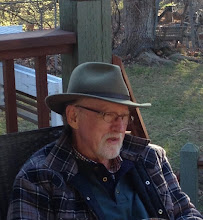
I met "TMoist" in September, 1973, when we both started at Carihi, having missed meeting him in Esquimalt, the RCNR (where we both became commissioned, if very junior, officers), and in Quesnel, where he worked one summer for an environmental organization of which Sandy and I were active members.
We have been friends ever since, and our paths have crossed and re-crossed regularly, so it's curious that the only photo I could find of him was from the summer of 1976, when he invited me to go sailing with him.
In the last few years we talked about another, but to my regret never managed it.
At my age one gets a bit numbed by the number of deaths among people we know, but this one is different: closer, and more personal: I'm really going to miss him.
--"Havelaar"

Friday, July 10, 2020

letter to the Globe

Re Province To Stop Streaming Students Into Academic, Applied Tracks

Monday, June 1, 2020

Some lessons from school #3...writing, a central plank in the platform of our culture

These days I spend an awful lot of time behind my computer monitor, reading. I realize that statement would have been pure science-fiction to my teenaged self, but I also realize that, although the technology has changed dramatically, the art of writing hasn’t. It’s still a central plank in the platform of our culture, and a certain amount of mastery is mandatory for fully-participating members.

I used to teach high school English, and for most of my career the abilities of my graduating students to read and write at an appropriate level were judged 60% by me and 40% by an examination they all wrote at the end of Grade 12. The essays they wrote on this examination were evaluated by a bank of professional educators, fellow teachers mostly, hired for several weeks during their summer vacations for the task.
So, although I was, and am, a firm believer in encouraging student writers to find their own language and organization, when I was preparing my students for the exam essays, I would conjure up this scenario: “Imagine a large, non-air-conditioned room full of English teachers, mostly men, in shorts and t-shirts spending the beginning of their holidays. They’re assembled to read piles of essays written by students like yourselves, as quickly and efficiently as possible. Your job is to make your essay stand out in this ocean of 5-paragraph sludge, to grab the attention of those readers. And to do that, you need a compelling introduction and thesis statement.”
I’m pretty confident that at least a few of them managed; certainly I nurtured more than my share of excellent student writers!
But that’s not the audience I’m writing for; you, readers of blogs and Facebook, are.  So I expect you will indulge me if I give you some anecdotes, and let you draw your own conclusions...

I remember seeing Stephen Hume, editor of The Martlet at Uvic at the time, sitting behind his typewriter in the basement of the SUB, rapidly cranking out course essays on piles of half-sheet yellow paper. I was monstrously impressed. I was still handwriting my essays laboriously and, because I was a slow and inaccurate typist, I had to pay someone else to do the required typing. That required a readable copy based on my text, corrections, and annotations. A man of more determination and character, would, of course, have taken the bit in his teeth and learned to type properly; instead, I was bailed out  (as is so often the case!) by my wife, an excellent typist, who solved the typing problem for the rest of my university time, my early years of teaching, and even my very brief stint as a newspaper columnist.

According to the standards of the time and my high school English teachers, I was a good writer, the kind you see represented in the “literary” section of your high school year books. I was certainly encouraged by approval and publication, but reading those pieces now, I see the efforts of a sort of junior Lord Black of Crossharbour, with pomp and circumstance substituting for actual style and content. By the time I became a teacher, I no longer wrote like that, and I certainly didn’t encourage my students to do so either: I taught them how to write for newspapers; and to write informal journals quickly, off the top, not worrying about style at all; and to write stories with a beginning, middle, and end, (not necessarily in that order); and to write essays – lots of essays – that would make their teacher want to read and understand what they had written.

Like most English teachers, I quickly got adept at decoding a lot of very bad handwriting. And regularly asked students to include a previous draft of their essay with the copy they wanted me to read, just so I could see if they had made an effort at polishing. At the time, requiring a rough copy was a thing, and most English teachers demanded one.

Good writing demands an audience to write for, so any good writing program requires a method of publication: and hasn’t the world shifted dramatically and rapidly in that regard?! My friend Mike and I had put together a couple of literary/arts magazines while students at Uvic (paid for by the AMS!) so I knew the basics of preparing copy for publication. However, schools don’t usually have those resources, so my first writers got their efforts posted on the wall, then we got a typewriter or two in the classroom and made gestetner copies from masters covered with red corrector fluid. Carihi purchased an offset printer and allowed me to use it so a school newspaper and magazine became possible. Then came photocopiers, then computers and an accessible internet...and the rest brings us up-to-date. By the time I retired I had writing classes in a computer lab where selected students and I used a layout program to produce online and printed writing magazines on demand. And most of my other students handed in only word-processed work.

The other thing that happened was that technology changed the writing process. Our family got its first computer (a Circle100, 64 MB of internal memory) in the mid-1980’s, and almost immediately discovered why this machine was going to change our writing forever. For example, I learned how to type, by doing it, looking at the keys and correcting en route. It instantly demolished the rough copy/good copy paradigm: I couldn’t very well ask my students to provide rough copies if I no longer produced them myself! It likewise demolished my former method, so carefully drilled into me by my high school teachers, of careful planning, writing continuously from an outline until concluded, and then rewriting, making revisions as needed. As the home computer became the only way we wrote at our house was it logical to demand an outline from students? Especially as, when I embarked on a piece of writing, I usually had only a sense of where I was going and how I was going to get there? Increasingly, there was a gap between what was required on the Government Exam (handwriting, consequently careful planning before starting) and what I knew about the writing process and the actual norm among my students.

I wrote a piece for the Globe and Mail on this very subject so I won’t revisit that argument now.(https://www.theglobeandmail.com/technology/johnny-cant-write---does-it-matter/article1093149/
I notice that my call for a wired classroom turned into a Wi-Fi enabled classroom, and that, instead of permitting students to write their exams online, the Ministry of Education cancelled the exam. That’s a choice I applaud, though I suspect it was done for financial rather than educational reasons. In that respect, full circle back to when I started teaching, when the Ministry had, within the decade since I had graduated from high school, dumped Provincial final exams!

These days I have a daughter who teaches English, and am reminded of my father, who became an English teacher in Canada but retired before the advent of the computer age. He started by writing his recollections of growing up in Holland and coming to Canada in longhand, in his beautiful italic script, but when, aged about 80, we got him his first computer he took to the writing and email part like the proverbial duck to water. It gave him great joy to print out those recollections and pass them around to relatives and friends. He even allowed me to publish them on the web where they will live long after both of us are gone. (https://justhavelaar.wordpress.com/

When he was a boy, the telephone hadn’t yet made its way into his family’s life. Who coulda thunk it?

Where are we going with this? There are people I know who “write” by speaking into their phones, and claim this is the way of the future. But don’t believe it: good thought requires good writing, and that requires good revision. 

Even President Trump, in the rare times he really wants to make sense, reads what someone has written for him off the teleprompter!

Saturday, May 2, 2020

Some lessons from school...#2 Bending the bureaucracy

I make no case for the literal accuracy of these accounts, and my memory has almost certainly filled in the blanks with verisimilitudinous detail. Nonetheless, they are in every other respect accurate.
It’s November, 50 years ago, Quesnel Secondary. 
A group of girls has assembled in Mr. Havelaar’s room. They are organized by a girl in Mr Havelaar’s class, a mouthy spark-plug of a girl called Enid Goodman and are clearly agitated and unhappy,  looking for a solution to their problem.
But it’s not Mr Havelaar they are unhappy with; it’s the school’s dress code. Mr Havelaar has expressed an interest in their dilemma.
This is the gist of their complaint: Quesnel becomes very cold in winter, and over 60% of the students who attend Quesnel Secondary arrive by school bus. That involves waiting for the bus in temperatures that occasionally dip as low as -35 degrees fahrenheit (the temperature at which the buses stop picking up students) You don’t do that wearing a skirt or dress, as required by the school’s dress code for girls. So what happens is that the students are dropped off, the girls go to the girls’ washroom to change, and there isn’t room. So they wait until there is. If the bell for the start of classes has already gone, they then have to go to the office, pick up a late slip, and arrive in class late.
All of this could be solved by simply allowing girls to wear pants in school. The girls have tried the normal channels without success.
This is curious, because the change has already happened in much of the province, including schools in Victoria, which obviously has a much less-severe climate.
But the rules have yet to change in Quesnel. 
You may well ask why that would be, and Mr Havelaar, although he is a teacher new to the school and therefore hasn’t been through these wars before, has a theory:
Quesnel Secondary is unusual in the province, maybe unique, in that nearly 50% of its staff comes from overseas, particularly Australia and the UK. These teachers, admirable as many of them are, were educated and trained in very different systems; some of the women on the staff are particularly single-minded in their determination to “civilize” the girls of the Cariboo. They are quite convinced that school uniforms would be an answer. 
Add that to the fact that the principal is a new arrival and that therefore the school’s administration is still finding its feet, and you have the root of the problem.
So, what to do? 
What would Saul Alinsky do?

Here a brief digression:
One can read all about Saul Alinsky, American “community activist and political theorist” in the extensive Wikipedia article, but for our purposes the fact that in 1946 he published a tract called “Reveille for Radicals”, which I read sometime in the mid-60’s, is the salient point. In it he describes a number of apparently intractable social issues which were solved by using the vulnerable points of the offending bureaucracy against that bureaucracy in creative ways. I was much impressed, and have kept the advice close ever since.

Anyway, back to the girls and the dress code.
The plan we come up with, when we do, is the very essence of elegance and simplicity. We ask: 
Who do we need to influence? The administration.
Who holds the keys to that influence? The secretaries, who sit outside the office, have to deal with the girls and their late slips, and who the administrators will hear from if they’re unhappy.
Solution: the girls will wait until the last minute before changing. The girls’ bathroom will be even more plugged than usual. There will be a very long line-up for late slips. The school will be seriously disrupted, and the secretaries will become seriously annoyed.

All that was required was that the girls had to organize themselves to follow the plan, which they did.
There was some blowback, but very few days later the administration capitulated, and pants were permitted.
Score one for Girl Power, and note that the bureaucracy got the peace it wanted, as well.


My other illustration of bending the bureaucracy is from Timberline, only 20 or so years ago, and I had almost nothing to do with it.
From the time Timberline opened, student smoking was an issue. I believe we first tried a “smoking room”, but that quickly proved to be unsatisfactory. And then the space was required for a classroom. There was a “smoking area” just outside the back doors of the school. The art-teaching staff, who had their classrooms in that part of the building, were less than enchanted with the mess and ambient smoke, and there were pretty-much constant reminders that duty staff had to be more vigilant in patrolling. Finally the smoking area was banished across the field, with the attendant and predictable mess, strife, and patrolling problems.
The staff absolutely hated student smoking, but knew it would happen regardless, particularly due to the joint-occupancy of the facility with North Island College. So we made the best of a bad situation.
And then the government of the day went on a smoking crusade, and declared that all public institutions had to ban smoking on or near the premises.
The Board and Superintendent had no choice but to declare that schools would be smoke-free, and that included Timberline. Student smoking was banished.
Of course, that didn’t prevent students smoking.
They merely moved off school property, onto the sidewalks on Dogwood and Rockland. And into the adjoining Beaver Lodge Lands.
Teachers were asked to patrol these venues (and this is where I do play a small part) but the staff absolutely refused. Our position was that if these areas were to be patrolled, other people would have to do it, teachers having no authority off school property.
The administration briefly tried to control the problem, but it soon became obvious that, in order to get any handle at all on the situation, they would be spending much of their day policing smokers.
And then the calls from the public started to come in, not just from people who were upset and offended by students from Timberline, but also those from Carihi. And the mess built up, without any way of dealing with it.
Eventually, and without any public declaration, the smokers were unofficially re-admitted to school property, where they were at least out of sight.
Alinsky would be proud of them!

Wednesday, April 29, 2020

Some lessons from school... #1: confronting “ism’s”

These incidents happened a long time ago, and I make no special claims for the accuracy of my recollections. They are based on my fallible memory, my inclination to organize memorable incidents into anecdotes, and not on a written record. 


The year after Robron Secondary opened, John and I joined the faculty.
It was a brand-new building -- so new, in fact, that there was still some ongoing construction – which housed a newly-assembled student body, staff, and administration. There were still a lot of start-up problems, and before we left, our solicitous colleagues at Carihi had made a point of acquainting us with rumours about all of them.
The school had opened with Grades 8 to 10, added Grade 11 the year we joined, and 12 the year after. With very few exceptions the school drew its student body from Pinecrest and Rockland, the most middle-class parts of Campbell River. Consequently, with the exception of a significant cohort of children of immigrant South Asian parents, the school was very white.
In the years when there was still a forest between Rockland and Pinecrest, before Robron and that part of Campbell River were built up in other words, there had been a number of nasty racist incidents in our Rockland neighbourhood, including at least one pitched battle involving a group of Sikh young men pitted against a group of their Campbell River yahoo contemporaries. Fortunately, if I’m remembering correctly, the police managed to break it up before any serious physical damage was be done. But the tone had been set.
Anyway, that legacy had entered the school’s culture, carried by some of the students, including some of the most senior and the most socially elite.  
Racism was more overt in Robron than I had ever experienced it in a school before, and particularly ugly when it involved South Asian girls, who had the double burden of being obviously South Asian and female. So it wasn’t at all surprising when it became the topic of a staff meeting.
I’ve always attributed the plan that emerged to the Vice-Principal/Principal team of David Brown and Kieran O’Neill. It now seems unlikely there wasn’t some kind of class instructional component, it being a school, and all, but what has stuck with me is the part that actually worked. And that was simplicity itself: it required each member of the entire staff to instantly confront any racist act or word with the admonition: “We don’t do that here.”
Lecture, lesson, follow-up not required: just “don’t”.
I initially had my doubts. In my experience, teachers (and I count in my own inclinations here) don’t like confronting students they don’t know well, and don’t like dealing with issues not directly connected to their particular part of the curriculum. Especially social issues like racist beliefs and culture; teachers tend to believe schools have Counsellors and Administrators to tackle those tasks. Furthermore, this initiative required unanimity, which is also really hard to achieve on a very diverse staff.
But it worked, and remarkably soon we (almost) never again had to confront racist sentiments in the halls.

Years later, when Timberline opened, melding the high school components of Robron (closing because of dropping student numbers) and Southgate (becoming a middle school) we experienced a similar issue. For some reason homophobic expressions were very common that first year; you literally couldn’t travel the halls and common areas without hearing someone call someone else a “fag” usually in jest, but frequently to wound or belittle. 
That was clearly inappropriate and unacceptable, and the staff agreed to institute a program similar to the one that had been a success at Robron, years earlier. 
This time the program initially appeared to be less successful than before, possibly because it was a much larger school, possibly because there were many more common areas and hallways which were hard to monitor, and probably because there was less staff buy-in. But it was successful in the longer run; by the time I retired some seven years later one hardly ever heard homophobic slurs in the hallways.

I’m quite sure no fundamental racist or homophobic beliefs were modified, but they certainly weren’t amplified either, and that’s the point. It is perhaps enough that it became unacceptable to express them at school. 
I think that’s probably as much as any school can aspire to.

Tuesday, April 21, 2020

Bilingual/bilingue

I’m only 75, and I’ve already been bilingual twice.
The first time, of course, was that relatively brief period after arriving in Canada between becoming functional in English and then dropping the Dutch entirely, even at home.
At first my parents really tried to maintain our Dutch at home and we must have done that, because at the time my mom’s English really wasn’t up to much. But when I was in Grade 6 my parents decided that they needed to go to Normal School to become teachers, and so Dutch was dropped en famille in favour of English. The family never went back.  My sister, who was 5 when we left Holland, has since regained a fair bit of fluency and my youngest brother, who wasn’t actually speaking yet when we left, spent a year in Holland after high school and became quite proficient. I, who first learned to read in Holland, can still read rudimentary Dutch, very slowly, because I have to sound the words out, and have retained an accent in the few words and phrases I can bring up when the situation requires that temporarily convinces Dutch speakers that I remain competent. 
It doesn’t take many sentences of very juvenile Dutch delivered in that authentic Dutch accent to disabuse them of that thought, however!
I’m often asked whether I regret that loss of my native language. No, I don’t. Our Dutch relatives are all really comfortable in English and my parents only spoke Dutch when relatives from Holland visited, and sometimes not then, so our incentives were and are limited. It’s not like Dutch is a very useful language...
Unlike French, which is, and especially in Canada. 
My dad had received a classic “Gymnasium” education: Dutch, French, English, German, Latin, and Greek. He was quite sure that his children should emulate that model to the extent possible, which meant English, French, and Latin. Being the eldest, I got to try out this educational theory, which is why I took Latin by Correspondence in Grade 9 and the second level in Grade 10 in a school where it was offered by my favourite teacher, who more regularly taught English.
I hated Latin, which was all rules of grammar and their application and I just hated rules of grammar. The joys of solving the elegant puzzle of Latin constructions, which people like my spouse claim to have relished, entirely escaped me.
Lesson learned: though it was available in a few schools in BC and always by Correspondence until the beginning of the present century, no other Havelaar took Latin in a Canadian high school. (Sandy took it in high school and at UVic, but she was an Irvine at the time!)**
But I liked French, took it all the way through high school, was active in the French Club, did fine, marks-wise, and cleverly took the “recommendation” on offer instead of taking the government exam, which undoubtedly required more knowledge of grammar than I had bothered to acquire.
Here the trail gets predictably sticky: because I had passed Grade 12 French, I was required to take the harder of the two first-year options at Uvic. And because I did well enough in that to pass comfortably, I was required to take the follow-up course the next year. 
And that is where my ability to fake competence in French came up against the hard reality of never actually mastering the grammar. Not once, but twice.
Eventually the rules were changed, and I managed to get my BA without second-year French.

Fast-forward a significant number of years. We’re living in Campbell River, where I’m teaching high school English and Sandy is teaching music theory. Sandy has a BA in French, the first three of our 4 children are already enrolled in French Immersion, and the youngest is due to enter “la maternelle” in the fall. I can see how this is going to end if I don’t do something about my lack of French skills: in a very few years the entire family is going to have conversations in a language I don’t understand. 
Besides, my failure still rankles.
So we decide to take a year off, rent out our house, and pile the entire Troop in our large, 12-passenger van. We’re off to Quebec City, where I’ve enrolled in a “French for non-Francophones” program at Université Laval and where the kids will spend the year in unilingual Quebec schools.
I arrive at Laval on the appointed day at the appointed lecture hall so I can take the competence exam, which will place me in the appropriate level. And once again my superficial appearance of competence strikes: I’m placed in the top level, along with students who are actually reasonably competent, in that they can speak what for all the world sounds like French to me. People who graduated from French Immersion programs but apparently didn’t learn the fine points, for example.
I realize immediately that I’m in well over my head.
There are 20 of us in the group, and I’m the oldest and least-competent. In the first session, trying to remember enough to explain myself to the class, I explain that “mon mari” and I normally live in Colombie-Britannique... and am at first puzzled by the burst of spontaneous laughter, then humiliated to discover that I’ve just told the class my that husband and I... You get the picture. 
It doesn’t get better for some time, and I’ve never worked harder or more persistently at anything academic than I did that year. Fear of being exposed as incompetent is a great motivator. But the results were worth the effort. By the end of December I had graduated out of the FNF program, and by the end of the year had completed the first half of Laval’s first-year French program.
For the second time in my life, I was declared and felt bilingual.
(Three years later I had negotiated an exchange to teach English in a rural school halfway between Victoriaville and Drummondville, so we returned to Quebec. But that’s another story.)
So that was me; what about the rest of the family?
When our kids started in French Immersion we heard a lot from “experts” who object to the program because: Immersion French is typically full of errors and anglicisms; too many of the students never achieve real mastery; the students’ English skills will deteriorate; the program is elitist.  There may be kernels of truth in all those observations, although we didn’t experience any of them.
Once Sandy had found us a place to live she registered the kids in local schools. For the three older ones, the transition was entirely seamless, as an anecdote will illustrate: Enid had just completed Grade 1 in Campbell River with Julie, a lovely young teacher originally from rural Quebec. In Beauport, where we now lived, she was in a Grade 2 class with two teachers, only one of whom Sandy had met previously. In October, during parent-teacher conferences, she met the other: “Enid is a good student, but has curious holes in her vocabulary. She didn’t know what a “chaloupe” is, for example.” Apparently no one had mentioned that Enid was an anglophone from BC!
Robin, our youngest, had a different experience: she started in the “maternelle” at another school and was picked up and dropped off each day by a little yellow bus. For the first few months of Maternelle parents were not welcome at the school, where there were no English speakers. In other words, she replicated the traditional immigrant experience: didn’t speak at school at all until late January and refused to speak English by the time we returned home again in July. Just like her dad!
Our kids are now the age Sandy and I were at the time. All of them are still competent in French, two have children in BC’s francophone school system (District 93) and two teach French in public high schools. All of them have had occasions to use their French skills.
As for me, we last lived in Quebec nearly 30 years ago, and what you don’t use, you lose. I no longer feel comfortable speaking (terrible accent never went away!) and writing French. I think if I ever had to, I could probably manage, but it would be a real chore. 
I still read French comfortably, so all is not all lost, but no longer consider myself bilingual.
Except for the census, of course, because being bilingual is a political statement in Canada, and I have papers to prove I’m entitled to use the designation!


**My siblings assure me I'm wrong on this recollection: they took it as well. Both
brothers recall hating Latin as much as I had so I was also wrong to feel uniquely
persecuted! I'm pretty confident, however, that years later, when my dad and I
were both working English teachers, he confessed he could no longer see the point.

Monday, April 13, 2020

Fear: a door into fascism

I was born in 1944 in Occupied Holland, during the last year of the war. My father, who had done his National Service in the Bureau of Statistics because of his Conscientious Objector status, was in hiding for a considerable part of that year because the German army wanted him. Happily, they were unsuccessful, and our little 3-person family was present for the subsequent Liberation by Canadian forces.  (Although my grandparents in Nijmegen were both killed before then by the Allied bombing that made that liberation possible.)
I don’t, of course, remember any of the war, but the familial memory of the time and the events leading up to it are the rock upon which much of my understanding of the world has been built. We haven’t discussed it, but I’d be surprised if that wasn’t also the case for my siblings.
My parents were not the sort of people who tell war stories. That would partly be true because their experiences had been mostly of banal deprivation and loss, punctuated by relatively brief periods of intense anxiety and fear. Mostly, I suspect, they had just muddled through, like most of their compatriots. But two stories from the war have accompanied me throughout most of my life: my dad hiding from the German army, when he knew they were hunting for him, in the pigsty of a neighbouring farm, and my mom recounting the horror she felt when, in the early stages of the war, citizens of Nijmegen, either fearful for their own safety or from personal conviction, turned fellow citizens who happened to be Jewish over to the invaders. A couple of those citizens who just happened to be Jewish had been their classmates.
At the time my parents were very liberal Christians, so much so, I discovered fairly late in my dad’s life, that before the war he had seriously considered studying to be a Minister. The war intervened, but when we moved to Canada and Terrace some years after the war, they sought out the United Church there and became staunch contributing members. That continued when we moved to Victoria, and ended abruptly when my father discovered the new Minister was an anti-Semite. I never learned the particulars, but the family never went back, and as far as I know none of us were ever Christians in that church-going sense again.

None of this is particularly interesting or relevant except that it accounts for my dismay when I read recent Facebook comments to the effect that some correspondents, particularly those already insulated by bodies of water, are so fearful of infection by Covid-19 that they believe their fellow citizens should be forcibly prevented from traveling. (At Easter! Talk about missing the message!)
I wasn’t traveling at Easter, and I won’t be traveling anytime soon but I just know that attitude, the one that says, “you’re not from here, and therefore you’re a danger” is very close to “you’re different, and therefore we should fear you”. It’s a wake-up call to considering where such attitudes potentially lead, and how they cater to that beast that lurks inside us all: the call to authoritarianism, the call to repressing the “other”, the call to our worst instincts, to fascism.
We have short memories, but most of us can remember when AIDS had us in a similar place, and the overt homophobia it engendered. We appear to have weathered that, but many of us can recall the calls to quarantine, to banish, to outlaw.  Indeed there are countries and states and politics that still indulge those fascist inclinations, usually in the guise of religious belief.

So what about people who go to the cottage at Easter? Why are we even worried about them? Why would we assume they are less responsible than we are? If you live in a downtown condo with your two children, have you suddenly lost the right to some down time at your cottage? Have your rights diminished because you don’t live there year round? 
Maybe some people should mind their own business unless they are actually threatened by something other than paranoid fantasy.
I’m not suggesting that Covid-19 isn’t scary. It is, particularly because we don’t know who can spread it. But our health authorities have very deliberately not panicked, and neither should we.
Obviously we should practice social distancing religiously, because we know we will not be infected by a carrier who is 6 feet or more from us. I note that in Campbell River, anecdotally, we’re already very good at this: I have a lung condition which is helped by walking daily. These days there are many other walkers, and they all so far, like me, have been scrupulous about keeping their distance. They even make a point of keeping their dogs away, although dogs really aren’t much of a concern.
We should wash our hands and avoid touching our faces when we have touched something potentially contaminated. I notice that the stores I shop in, nowadays infrequently, are excellent at disinfecting carts, surfaces, etc. They’ve gotten the message, and if they hadn’t I wouldn’t shop there.
Lastly, we should cover our mouths and noses if we think we have any potential of being a carrier. The mask won’t protect us, but it will potentially protect the ones we meet.

If all of us do all those things, we will not be a danger to others and they will not be a danger to us. We will beat this Covid-19, regardless of where we live and work most of the time.

Sunday, April 5, 2020

And then, there's that.

That was Week 3, I think.
We're still mostly isolated. But our part of Campbell River appears to be mostly normal. Except for a distinct lack of kids in the park, no discernible gatherings in the neighbourhood, and many more walking couples than usual.
On Tuesday San went to do a grocery run to the Superstore, which is pretty much deserted after 6 when she goes.
On Monday I walked with Geoff as usual, except that we can't break the walk up with an exemplary cup of coffee at the Sundance, because it's closed. (Best Americano in CR!) It's a long walk for Geoff if we can't stop halfway, but the conversation is always good.
On Saturday, it started to hail and then it snowed at our house. (Of course I replaced the winter tires on Wednesday.) Fortunately, it didn't last, and other parts of Campbell River weren't affected at all: Robin and Mike, in Willow Point, were quite surprised to see the amount of snow on our car when I met them to walk behind the airport because they hadn't had any at all.
On Friday I was scheduled to walk with Paul, but had to cancel because I had developed a very sore throat overnight. Also, I thought perhaps I'd lost my sense of taste, because I wasn't getting anything from my morning coffee. And I know the symptoms.
So I went for a long one by myself, and felt much better afterwards.
On that walk I met Rodger and Barbara with their dog, Kona. I know them because Eli and I used to meet them quite regularly, and Kona, like Eli, being mostly husky, was one of the very few dogs we met who understood Eli's insistence on proper Husky Etiquette, and consequently didn't pose a threat. Anyway. I asked them how they were, and they said they'd only just recovered from something unusually nasty, which had all the externals of Covid, but couldn't be proven to be because they'd recovered, and consequently hadn't been tested. But it had laid them very low for over two weeks, and when I saw them was their first walk for some considerable time. Although they were walking, they weren't yet traveling at their usual speed. Kona, however, was just fine, and enjoyed browsing the long grass that was growing beside the road while we talked.
Speaking of Covid, my Twitter feed assures me Prime Minister Boris has been admitted to hospital for "tests"; I'm having to suppress my inclination to schadenfreude, and to hope for a speedy recovery... Though that seems unlikely, given Roger and Barb's experience.
Of course by now everyone knows that Sir Keir is the new Labour leader: my kind of Labour leader, although I could wish for a couple dashes more charisma. But my impression after listening to a couple of the speeches he gave was that he is a distinct improvement over his predecessor, both in policy and presentation. The most important principle of electoral politics is, of course, that a dogmatically correct position is no substitute for being agreeable and flexible enough that people will vote for you.
I'm always surprised when politicians like Corbyn and Sanders (and we've had our share in the NDP!) don't apparently get that.
On Thursday San needed to pick up a couple of exam books at Long & McQuade in Courtenay and I needed to get a prescription at Costco. So San picked up her books (phone ahead to let the sole attendant know you're coming, phone when you get there, stand back from the table in front of the door until the attendant opens the door and places the package on the table, retrieve package) and off to Costco. Room in the parking lot, and a few people at the door. Then a line all the way out the other end of the Costco parking lot and back out to the road. After 15 minutes of it not moving I phoned the pharmacy. No, they couldn't mail the prescription. To access that service you need to order through Costco.ca. But she'd noticed that the numbers fell off considerably towards the end of the day. So I left CR at about 5, zoomed through Costco picking up the entire list except popcorn, and was back in CR before 7. If we need to go back, we know what to do.
And that list of events doesn't even include all the SnapChats and Zoom conversations and...Leanne and Jay's Troops, who came over most days, just to talk for a while, us at the top of our steps and they at the bottom... All much appreciated.

Tuesday, February 25, 2020

The Press just loves a good "Indian" story

The press just loves a good “Indian” story.
Last year it was the plucky and principled “Indian Princess” Jody Wilson-Raybould, dressed in her First Nations blanket, following “my truth”, fending off the nasty politicians and their minions of the Prime Minister’s office, including the Prime Minister himself! That trope ended badly for our former Minister of Justice and Attorney-General (although she was re-elected as an independent, and is still sought-after copy) and very nearly cost the government re-election. It almost certainly would have, had it not been for an incompetent and insensitive alternative.
This year we have the largely self-styled (as it turns out) “hereditary chiefs” of the Wet’suet’en, marching for the photo op in full regalia down the main street of Smithers BC, willing to engage with any member of the Press at the first sight of a microphone. 
Thanks to the diligence of the Press and their eager informants, we now know far more than almost all of us did before about real and imagined Wet’suet’en cultural practices, the structure of Wet’suet’en traditional society, the economic power of rail blockades, the traditional and ongoing grievances of a very vocal minority of Mohawk, and the abilities of various politicians and police to deal with on-the-ground realities. 
Some of these things are instructive, a few are important, and all of them are interesting. Which I suppose is why some of us still buy newspapers and read them diligently.
Unfortunately -- and this is admittedly very much my own opinion -- much of the information we have been exposed to on this issue is pretty-much irrelevant to the actual issue at hand.

The issue is a natural gas pipeline, the kind that already criss-crosses BC to provide natural gas to BC homes and industry. Here’s the company description: Coastal GasLink Pipeline Limited is building an approximately 670 kilometre pipeline from the Dawson Creek area to the west coast of B.C. The pipeline will transport natural gas to the approved LNG Canada facility near Kitimat. The approved Coastal GasLink route was determined by considering Indigenous, landowner and stakeholder input, the environment, archaeological and cultural values, land ...” You get the picture; there’s nothing remarkable about this infrastructure, except that the gas is for export and that the line, in order to get to Kitimat, is pretty-much obliged to cross Wet’suet’en territory. 
In the distant past this would not have been an issue: the government would have approved, and the company would have just built the line, possibly consulting the Wet’suet’en bands, possibly not. But in 1997 the Supreme Court of Canada, in a decision called “Delgamuukw vs British Columbia” declared that the two tribal groups in the area, the We’suet’en and the Gitksan to their north, had aboriginal title to most of their claimed traditional territory. And that changed everything.
What Delgamuukw did not specify, however, was how the various boundary claims would be reconciled, how those decisions would be reached, or by whom. That was left for a future agreement or legal decision. And that part hasn’t happened.
So Coastal GasLink, having made the necessary accommodations with government and the designated regulator, made deals with all the elected bands on the proposed route and started building.
And that’s when the proverbial shit hit the proverbial fan, and we were treated to the famous photo op in Smithers. Eight “hereditary chiefs” declared that the bands (that is, the actual Wet’suet’en people and their elected representatives) could only decide for reserve territory; outside of those reserves only the “hereditary chiefs” could give permission. They and their supporters call that “Wet’suet’en Law”. They didn’t give their permission.
To me it’s absolutely mind-boggling how many otherwise rational fellow Canadians saw the logic of this: for example, the entire Green Party of BC got on board! What is it they don’t understand about Canada and democracy? What am I missing?
Because as far as I’m concerned, in a democracy people have a right to have an equal voice, and to make decisions in matters that effect them. And, as far as I know, Wet’suet’en people are Canadians, and, just like me, get to vote in Canadian elections and to participate fully in BC and Canadian institutions. The only difference is that, as aboriginal persons, they have a few extra rights, like the communal rights that come with their traditional territory, among which are the right to be consulted and the right to be compensated.
Those rights have been satisfied, so I’m confident that the pipeline will be completed. 

Of course, for most people who feel passionately about this, it’s not really about the Wet’suet’en and their protection of “the land” at all. It’s about the export of natural gas and the fracking that produces it. Those are real issues, and we shouldn’t pretend natural gas isn’t a fossil fuel, and that producing it and burning it isn’t bad for the environment. They are, and it’s not useful to minimize those facts.
That acknowledged, we also have to note that companies paid many millions of dollars to the BC government for the right to frack in the BC northeast, and to extract the gas. So that’s going to happen; no democratically-elected government could prevent it. We in BC already use about as much of that gas as we can; for example, ours is one of the few houses our neighbourhood that isn’t hooked up. (and we burn wood for heat, so we don’t get to gloat about our environmental superiority) That gas is going to be used somewhere, and so far a lot of it has, ironically, gone at cut-rate prices to the Alberta oil sands to release bitumen from its sand. Personally, I’d rather see it exported, hopefully bringing a better price and more jobs and revenue to British Columbia. 
So there’s that.
The other issue is the “land defenders” argument. I believe it when people say the Wet’suet’en people have a strong connection to their territory. But it’s hardly pristine, as a recent post I found on Twitter of an overflight of the relevant part of the pipeline route demonstrates. There has been intensive logging there for decades. Of course: the access for large parts of it, the pipeline route, in fact, is via the Maurice River Forestry Road. The one the activist blockaded before the RCMP did their duty and took it down.
And that’s where all of this started.